
Can AI Design Your Business Sign?
Over the years, we’ve found that one of the hardest parts of starting a custom sign project is helping a customer put their vision into words. To help guide the process, we used to ask customers to find a few examples of signs they liked, and share what stood out, whether it was the shape, materials, colors, lettering, or overall style. Those visual references helped our design team better understand the direction before moving into the details.
Today, AI tools are making that step easier. Instead of searching through dozens of websites for the right example, customers can now create visual ideas that help communicate the direction they have in mind.
That can be a helpful way to begin. But there’s still a big difference between generating an image of a sign and designing one that can actually be built, installed, permitted, and used effectively in the real world. That’s where real-world human expertise still matters.
AI Can Help Customers Communicate More Clearly
It might surprise some people to hear this, but we’re not against customers bringing us AI-generated sign concepts. In many cases, they’re a helpful part of the early conversation.
The concept doesn’t need to be exact to be useful. At this stage, we’re not looking for a finished design. We’re looking for clues about what the customer likes, what they don’t like, and where they want the design to go.
Maybe the shape feels right. Maybe the materials are close. Maybe the lettering feels too modern, or the colors aren’t quite there. Those reactions help our team understand the general direction. From there, we can refine the idea into something that fits the brand, the building, and the realities of production.
A Good-Looking Image Is Not the Same as a Buildable Sign
AI can create a polished concept quickly, but signage has to do more than look good on a screen.
A business sign has to work at the right size. It has to be readable from the right distance. It has to fit the architecture, meet local requirements, hold up to weather, and be fabricated from materials that make sense for the project.
There are also installation details that a generated image may not account for. How will the sign attach to the building? Does the wall surface support the design? Will the lighting work the way it appears in the image? Can the materials be produced cleanly at that scale? Will the finished sign be safe, durable, and easy to maintain?
Those details matter because they affect the final product. A concept may look great in theory, but the real test is whether it can be built correctly and function well in the space.
A Real-World Example: Anchor Earthworks
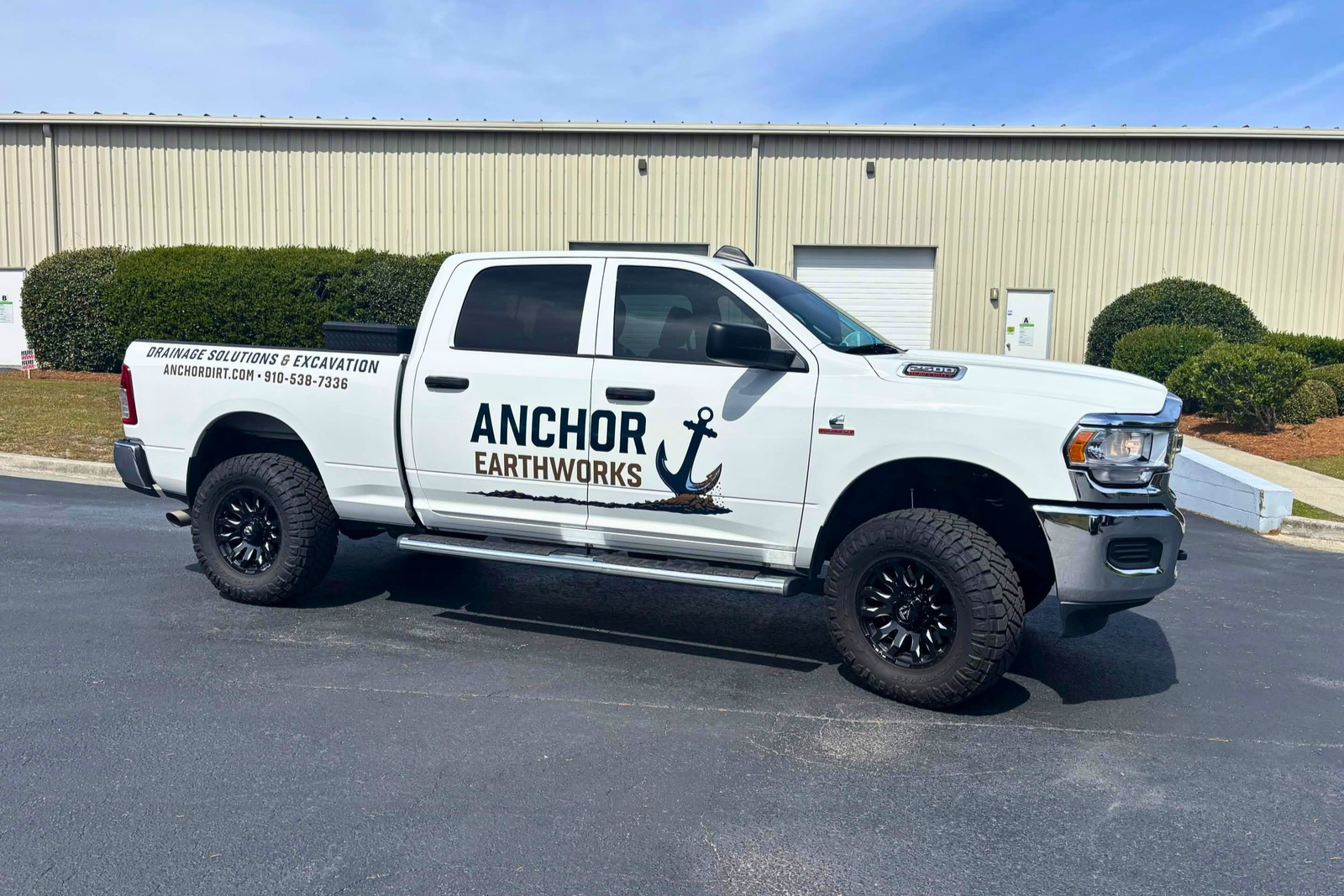
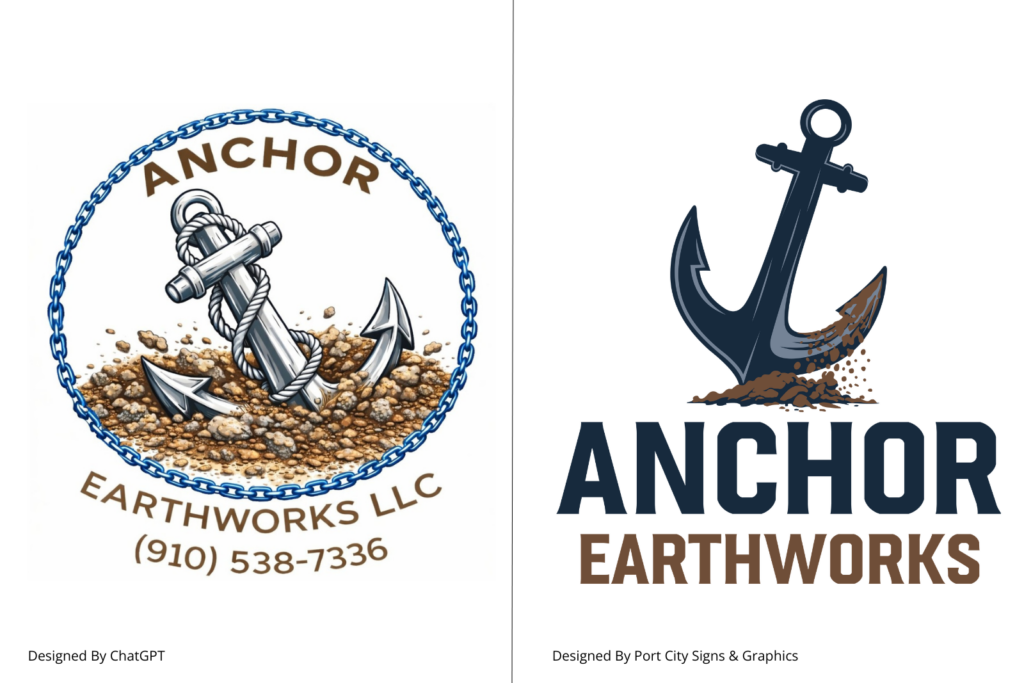
A recent project for Anchor Earthworks is a good example of how AI can help start the process, but still needs professional design experience to become something usable.
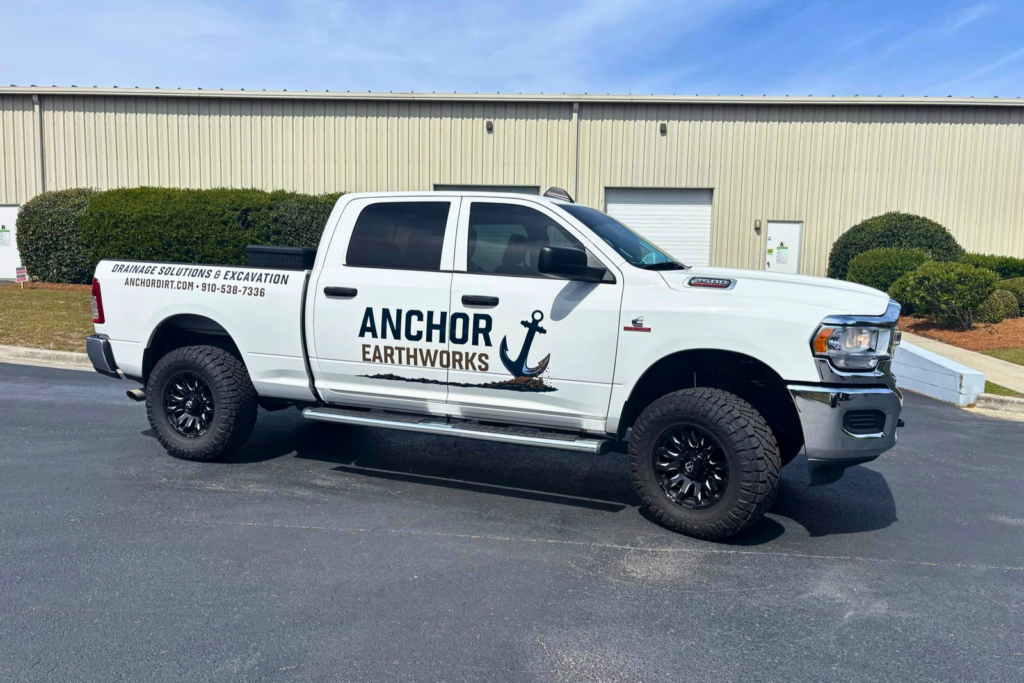
The customer came to Port City Signs & Graphics with an AI-generated logo concept that helped communicate the general direction, but it wasn’t suitable for a vehicle wrap in its original form. Our team redesigned the logo in a few different formats so it would work properly on the truck, while also giving the business cleaner, more flexible logo variations for letterhead, social media, and other branded materials.
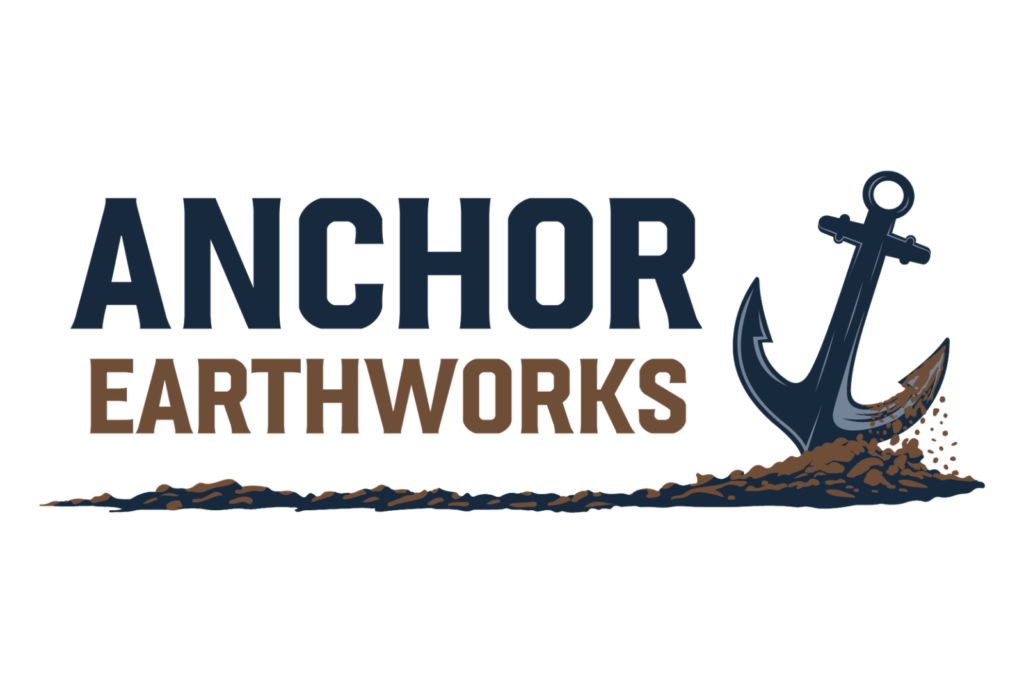
That’s the difference between a concept and a finished brand asset. The AI image helped show the idea. Our team turned it into something that could actually be produced, applied, and used across the business.
The Space Shapes the Final Design
Every sign has to be considered in context.
A storefront sign needs to work with the building facade, nearby businesses, and traffic patterns. A monument sign needs to be visible from the road without feeling oversized or out of place. Interior wayfinding needs to help people move through a space clearly. ADA and braille signage must meet specific standards while still feeling connected to the overall brand.
That’s why sign design isn’t just about choosing a look. It’s about understanding how the sign will be seen, used, fabricated, and installed.
At Port City Signs & Graphics, our team looks at the full picture before a design moves into production. We consider materials, size, placement, visibility, code requirements, installation conditions, and how the sign will hold up over time. Those decisions are what turn an idea into a finished product that works.
Human Expertise Helps Refine the Idea
AI can be helpful for inspiration, but it can’t replace the judgment that comes from real signage experience.
There are times when an AI-generated concept may need to be simplified so it can be fabricated cleanly. Certain materials may need to be adjusted for durability. Lettering may need to be resized for readability. Colors may need to be refined so they translate from a digital image to a physical sign. Lighting may need to be reconsidered based on the location and the way the sign will be viewed at night.
These aren’t small details. They’re the kinds of decisions that determine whether a sign looks right, performs well, and represents the business the way it should.
That’s where our team brings the most value. We can take the inspiration a customer provides and turn it into a practical, well-built sign solution that fits the space and supports the brand.
The Best Results Come From Using Both
AI can’t and shouldn’t replace the design process, but when used the right way, it can support it.
It can do that by bringing clarity to conversations that might otherwise start with a customer trying to describe something they can picture but can’t quite explain. From there, the real work begins. We take that initial direction and apply the experience needed to bring it to life. We look at what’s possible, what will work best for the space, and what needs to happen behind the scenes to move from concept to finished sign.
Have a Sign Project in Mind?
Whether you have an AI-generated concept or just a general direction, our team is ready to help you take the next step. Get in touch with us today, and let's talk about what's possible for your space.