
Restoring an Icon: How Signage Helped Bring Wilmington’s Trust Building Back to Life
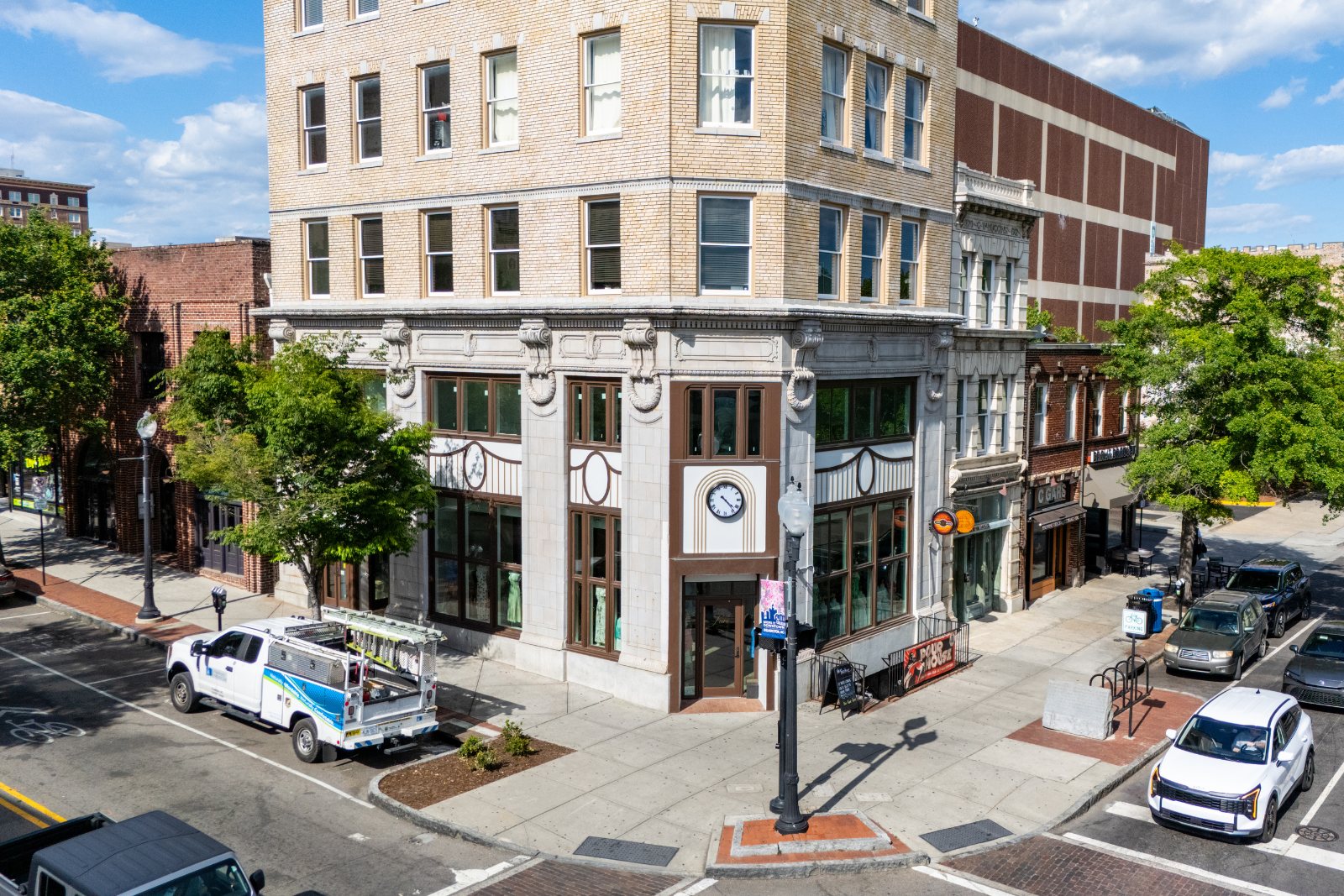
For months, scaffolding lined the Trust Building in downtown Wilmington, one of our city’s most recognizable landmarks. Crews replaced windows, repaired structural elements, and worked through a long-awaited restoration. But for most people passing by, it was hard to tell exactly what the finished vision would be…until the moment our decorative panels went up.
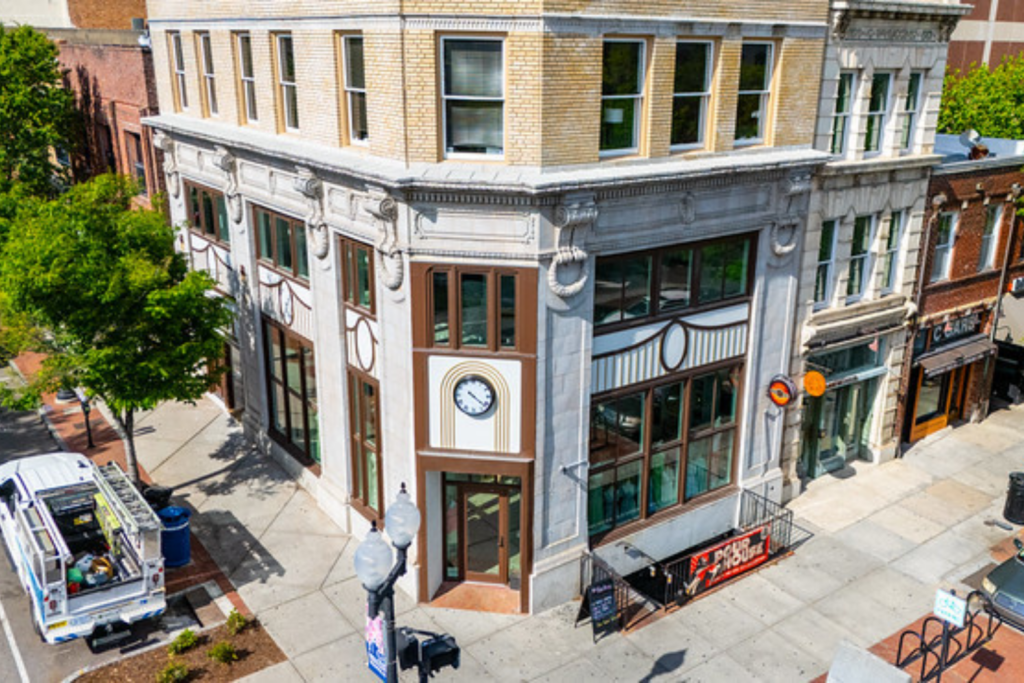
As the architectural signage elements were installed, the project suddenly came into focus. What had been just a construction site became something else entirely. Signage helped this restored landmark actually look like itself again.

A Landmark Worth Restoring
Originally built in 1912 as the Atlantic Trust and Banking Company Building, the Trust Building was Wilmington’s first skyscraper and remains a defining feature at the intersection of Front and Market streets.
Over time, however, the building had changed. Renovations in the mid-20th century altered key architectural elements, and years of wear left portions of the facade in need of repair. While the structure remained sound, much of its original character had been diminished.
The goal of the restoration was not just to fix what had deteriorated, but to bring the building back to something closer to its original look while still supporting modern use.
Restoring the Original Vision
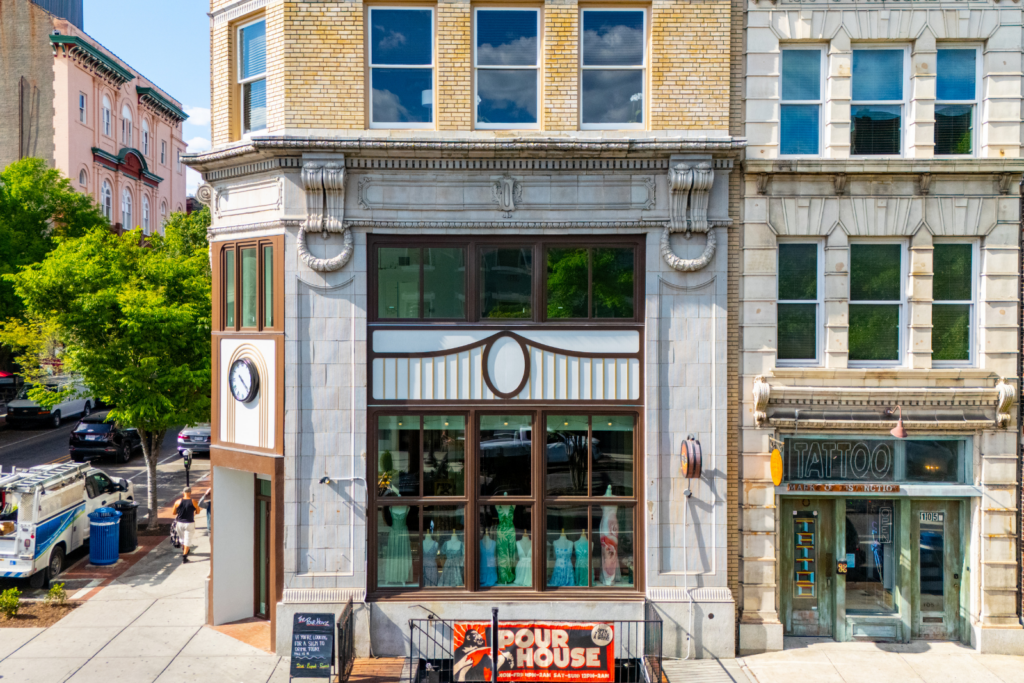
Led by project architect Brian Hollars of Studio Three Architects, the restoration focused on reintroducing architectural elements that reflected the building’s early design. Using a historic postcard as a reference, the team worked to reinterpret the facade in a way that honored its past while adapting it for today’s needs.
Originally, the first floor was designed as a two-story bank lobby with large, expansive windows. After World War II, a floor was added, and those larger windows were split and narrowed to fit the new layout. As part of the restoration, the design team shortened the upper portions of the windows and wanted to introduce decorative panels to restore the visual rhythm of the original design within the building’s current structure.
Reimagining Signage as Architecture
With that vision in place, the next step was figuring out how to bring those details to life.
We were brought into the project to fabricate the decorative panels after General Contractor Christopher Yermal with Old School Rebuilder & Co recognized our CNC capabilities. As the work progressed, the scope expanded to include the Trust Building name sign as well.
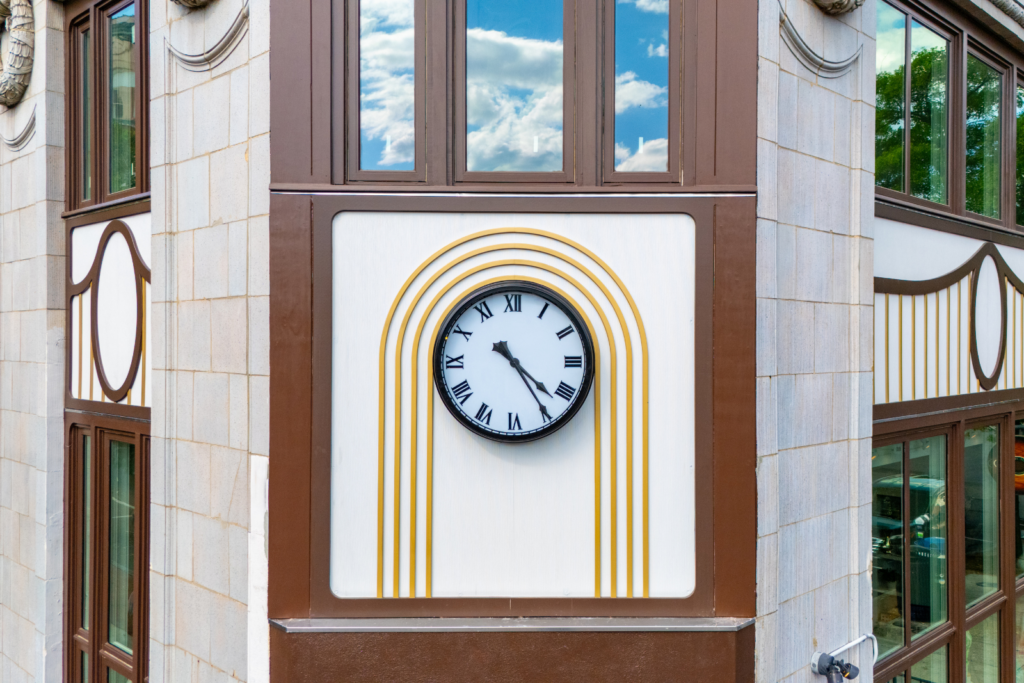
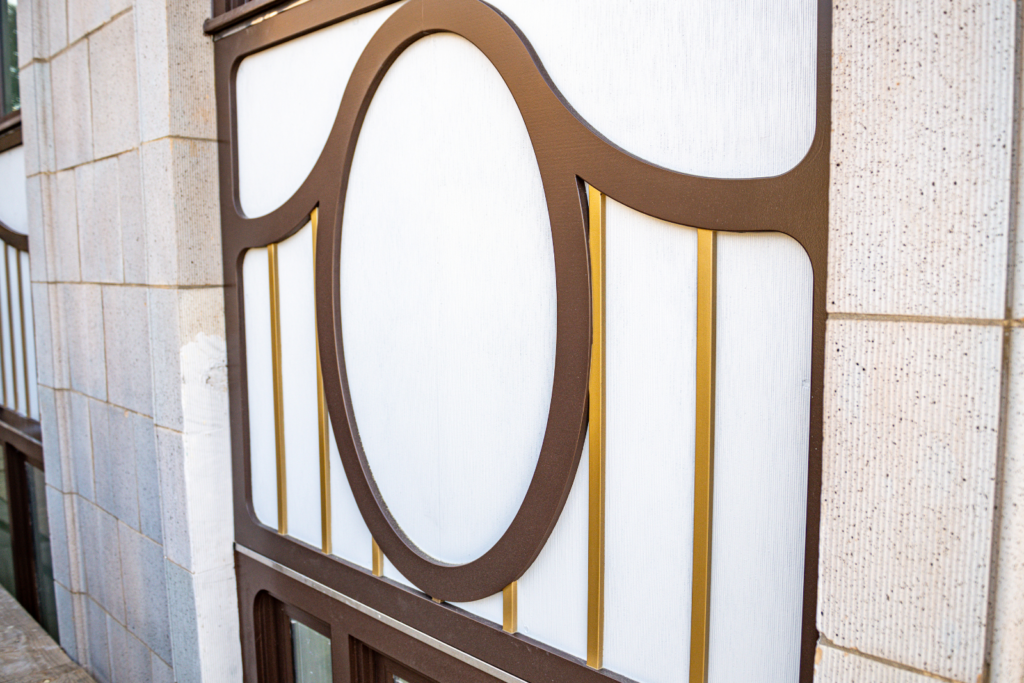
For the decorative panels, our team used sign fabrication techniques to recreate the architectural detailing that was prominent in the building’s original facade. Large HDU panels were precision cut using CNC technology, allowing for clean lines and consistent profiles that would have been difficult to achieve with conventional materials. This allowed us to produce large, cohesive elements rather than assembling them from multiple smaller components.
That same approach extended to the clock feature at the corner of the building, where the surrounding panel design was fabricated to frame the new clock so that it felt integrated into the facade rather than separate from it.
The texture and striations added to the panels were an important part of finishing those elements. They kept the surfaces from feeling too flat or out of place, so the panels felt consistent with the rest of the building rather than standing out as something new.
The dimensional lettering in the Trust Building name sign also offers another layer of classic detail. Architect Brian Hollars wanted the letters to stand off the face of the building with the studs showing, which was a traditional approach for bank signage. He also wanted the shadow line behind the letters to give them a three-dimensional texture, helping the sign feel like part of the building’s architecture.

Navigating the Challenges
Working on a historic structure brings challenges. Over time, buildings settle and shift, which means surfaces are rarely perfectly level. What looks precise in plans often requires adjustment during installation.
On this project, we accounted for variations in the existing structure while ensuring each panel aligned with the overall design. This required real-time adjustments and close coordination with Old School Rebuilder & Co.
Material selection was also critical. Traditional materials like wood were not practical at this scale. HDU allowed for both intricate detailing and long-term durability for exterior exposure.
In addition, installation required coordination with the broader construction schedule, including scaffolding access and sequencing with other trades. Maintaining quality while meeting those timelines required flexibility and communication across the team.
As architect Brian shared, “I think the people at Port City were fantastic about helping me and working through this. They did a sample board, which was such a huge help, and they were really great about sitting down together to talk through ideas and come up with solutions.”
When the Vision Became Clear
As the installation of the panels unfolded, the vision for the entire project became much more clear to downtown business owners and visitors who had been watching and trying to figure out what it was going to look like. Once the panels were in place, the design became visible and people could finally see what the building was becoming.
General Contractor Christopher Yermal explained why this was such a big moment for him. “When you guys started putting your panels in, that was kind of the unofficial big reveal. That’s when people started to get it. We had no shortage of people just praising the design and the execution.”
More Than a Sign Project
Projects like the Trust Building highlight what signage can be when it is approached with intention. This was not just about adding a name to a building. It was about helping restore its identity. By contributing to the architectural detail of the facade, our work became part of the building itself, and the end result feels seamless and intentional.
If you’re planning a project where signage needs to help define the character of a space as well as identify it, we’d love to talk. Get in touch with our team to start the conversation.