
MedNorth Health Center: Creating a Signage System for a Growing Healthcare Campus
For many patients, walking into a healthcare facility can already feel stressful before they ever reach the front desk. They may be anxious, not feeling well, running late for an appointment, or trying to navigate an unfamiliar building for the very first time. That’s why healthcare signage matters so much.
It helps people feel more comfortable and less overwhelmed from the moment they pull into the parking lot. Clear, thoughtfully placed signage helps people know where they’re going, where they need to check in, and what to expect as they move through the space.
Those considerations were front and center during our recent work with MedNorth Health Center in Wilmington. As the organization continues to grow and expand its downtown campus, creating a signage system that supports patients, visitors, and staff has become an important part of that effort.
A Growing Healthcare Facility Serving Wilmington and Beyond
MedNorth Health Center is a federally qualified health center that provides primary care, pediatrics, OB-GYN, dentistry, behavioral health, pharmacy services, podiatry, and more for patients throughout Wilmington and surrounding communities.
According to Chief Executive Officer Althea Johnson, the organization had simply outgrown its longtime facility after years of continued growth. “We could no longer provide care efficiently in the small space that we had,” she said.
In order to meet that increasing demand for services, MedNorth recently opened a new 35,000-square-foot building at 917 N. 4th Street.
Why Wayfinding Signage Is So Important in Healthcare
One of the biggest differences between MedNorth’s previous setup and the new facility is the overall scale of the campus.
The new building introduced multiple floors, expanded services, additional departments, and significantly more space for both patients and employees to navigate each day.
“Patients, customers, as well as staff need to find their way around the building,” Johnson said. “This building is two floors, and our staff has been used to operating off of one floor. The signage really helps everybody traverse the building.”
That’s where healthcare wayfinding signage becomes incredibly important. In facilities like MedNorth, signage helps guide patients to exam rooms, dental areas, restrooms, elevators, stairwells, exits, and check-in areas while also helping staff move efficiently throughout the building. When it’s done well, people spend less time feeling lost and more time feeling at ease.
Creating a Complete Healthcare Signage System
In addition to the wayfinding and directional signage, our team at Port City Signs & Graphics worked alongside Thomas Construction Group and Becker Morgan Group to create a complete signage package for the MedNorth campus.
The project included:
- Illuminated exterior signage
- Non-lit exterior signs
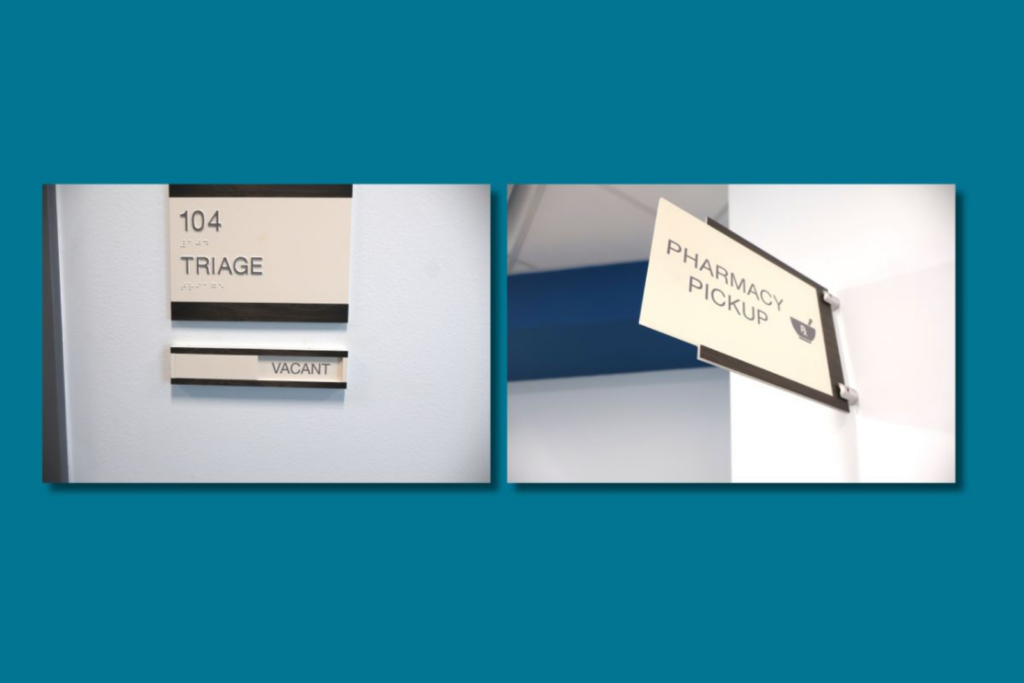
- ADA room identification signs
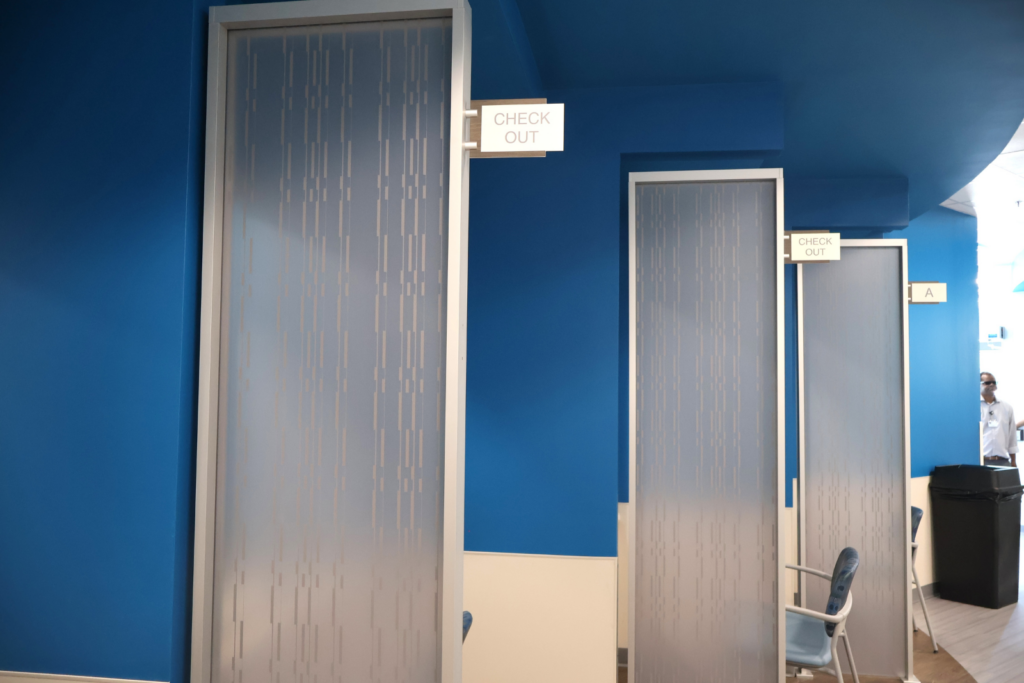
- Hanging and flag-mounted signs
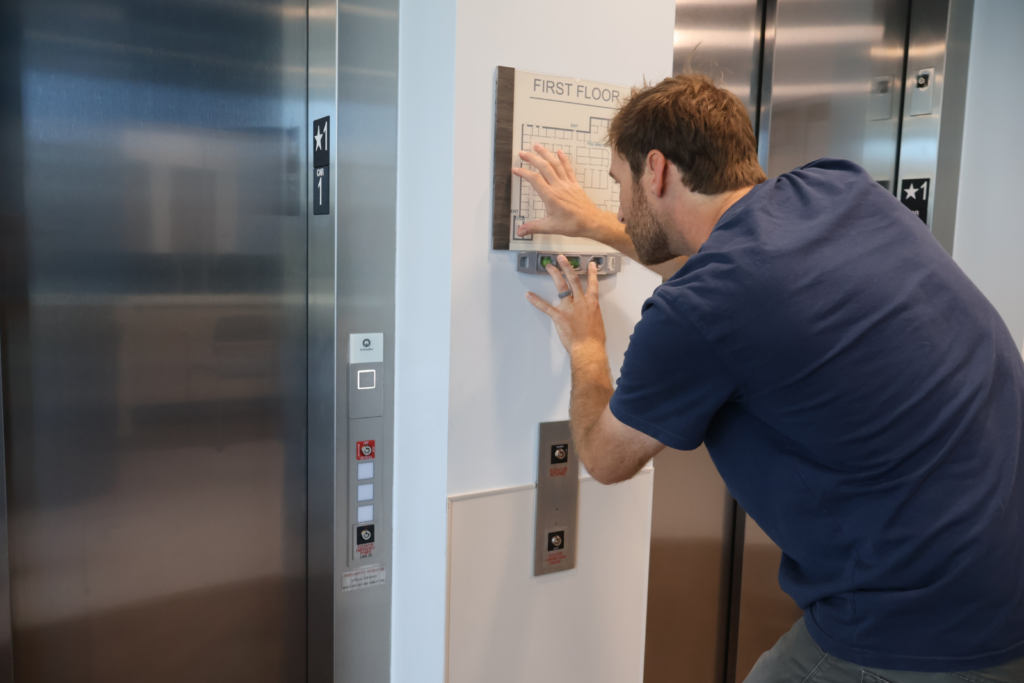
- Evacuation maps
- Compliance signage throughout the facility
For projects like this, signage has to function as one connected system rather than a collection of individual signs. That means carefully reviewing floor plans, traffic flow, ADA requirements, room schedules, and patient movement from the parking lot to checking out.
“Picture yourself walking through this building,” said Rebecca Diak, who is one of our designers. “Do you have any idea where you’re at? Where do you need to go? What’s the most common foot traffic? That’s what we tried to determine and figure out for the patient in this building and make it as easy as possible for them.”
That same attention to the user experience extended to ADA compliance as well. Our team reviewed the project to help ensure the facility included the required tactile signage, braille signage, room identification, and code-related elements necessary throughout the campus.
Beyond functionality and compliance, we also wanted the signage to feel like a natural extension of the space. While MedNorth's branding includes bright teal and green colors, we used our flatbed printer to incorporate subtle wood-grain elements into portions of the interior signage to reflect the building's modern finishes and create a more cohesive look throughout the facility.
Exterior Healthcare Signage That Creates Visibility
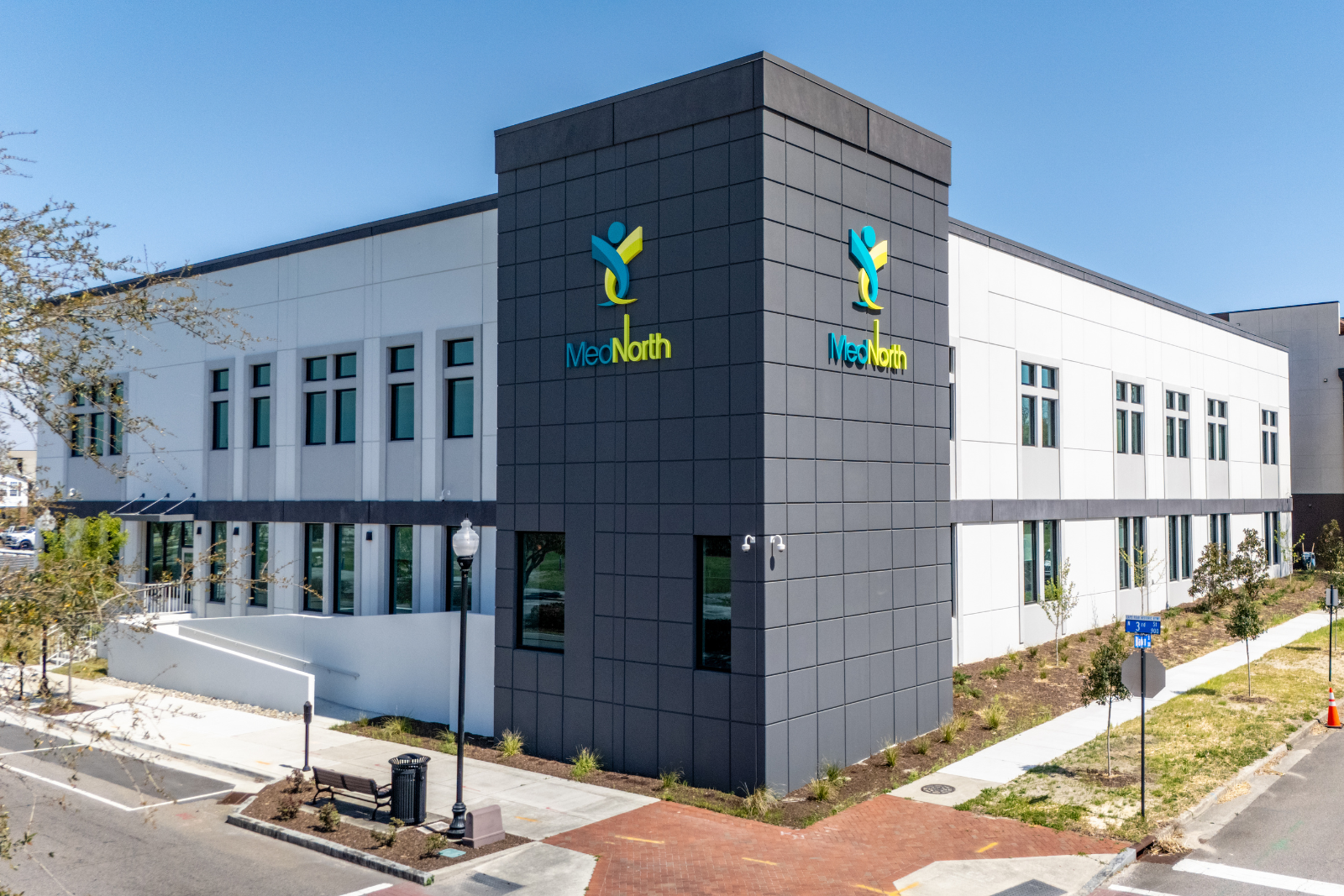
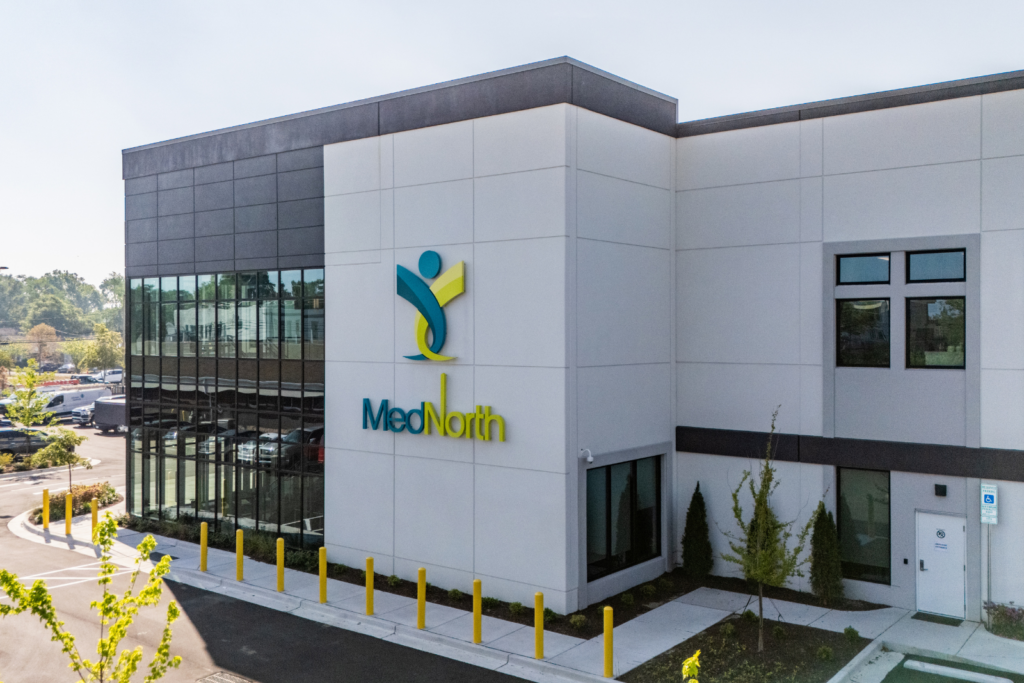
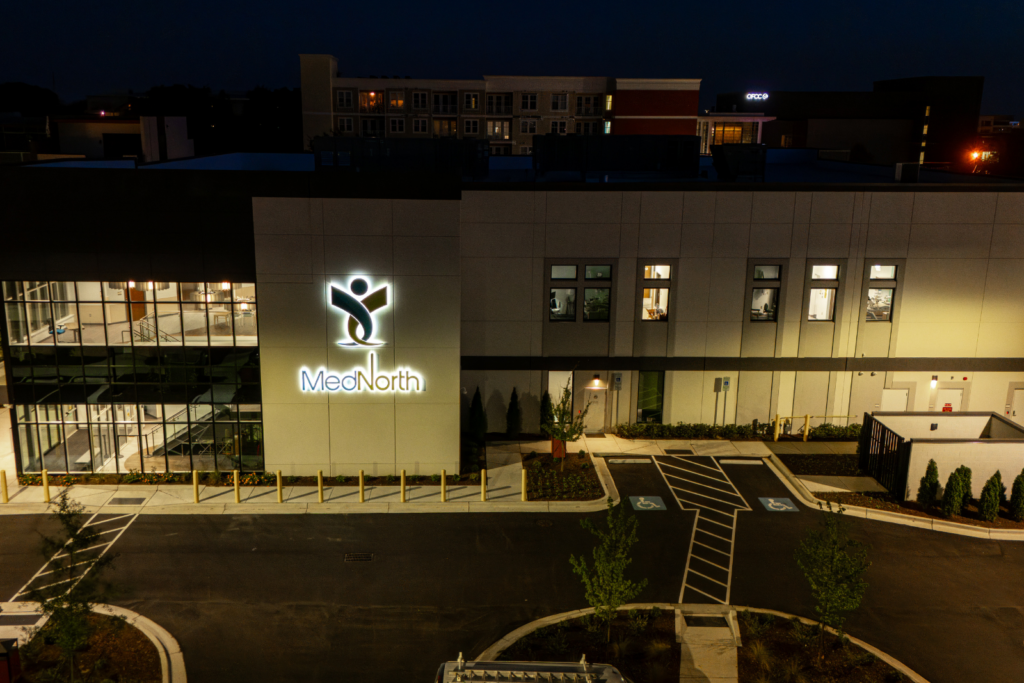
The project also included three aluminum exterior signs for the new building, including a halo-lit illuminated sign and two dimensional non-lit signs. Together, they create a strong visual presence for the facility and help patients immediately recognize that they’ve arrived at the right place.
“Even the non-lit ones are exciting,” said Diak. “They’re dimensional, and the brand itself for MedNorth has very bright colors that pop off the dark gray building.”
For patients arriving for evening appointments or simply for 24-hour brand recognition, the illuminated sign has an especially important role.
“The lit one is double the size of the smaller unlit ones,” Diak said. “To see that on the side of this huge, brand-new building, the logo just stands out so much. Then you add the lights to it, and it’s like a showstopper at night.”
Bringing the exterior signage package to life required close coordination between contractors, designers, and our team.
“We did have to change the size, but that was something you all brought to our attention,” said Parker Bishop with Thomas Construction Group. “You took that and ran with it, working with the City to get approval for the size changes.”
That collaboration helped ensure the finished signage package created the strong visual presence MedNorth was looking for.
Signage That Supports the Patient Experience
One of the things we appreciate most about projects for healthcare facilities like this is knowing the signage serves a much bigger purpose than branding alone. It helps support accessibility, improve navigation, reduce stress, and create a better overall experience for the people walking through the doors every day.
If your healthcare facility is planning a new building, renovation, expansion, or signage upgrade, we'd love to help. Contact us to discuss your project and learn how a thoughtfully-designed signage system can support your patients, staff, and visitors from the moment they arrive.