
Making Waves at UNCW: Creating a One-of-a-Kind Surfboard Sign
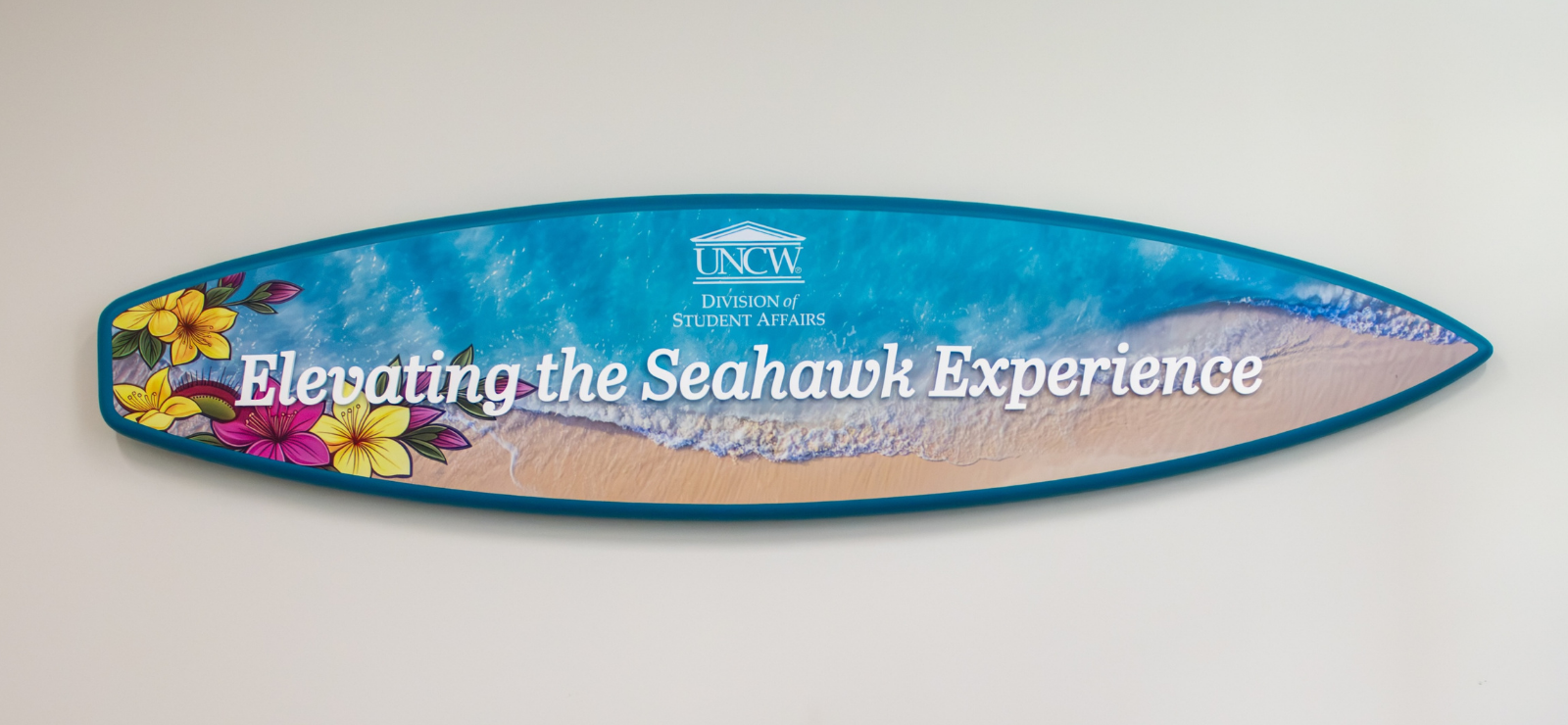
When a project starts with “We want a five-foot surfboard,” you know it’s probably not going to be an ordinary day at the sign shop.
That’s where this project for the UNCW Office of Student Affairs began. They wanted a surfboard-inspired piece for one of the main walls in their office that would catch students’ attention and feel right at home in Wilmington.
It was creative, it was different, and it gave our design and production teams the chance to try a few things we hadn’t done before.
First, though, we had to figure out how to make it.
Why Not Start With a Real Surfboard?
That was actually the original idea.
The Student Affairs team initially asked whether we could source an actual surfboard, and technically, we could have added both vinyl graphics and the dimensional lettering they wanted to one. The bigger challenge was finding the right surfboard for this particular project.
UNCW wanted the finished piece to be five feet long. Most surfboards with the longer, flatter shape that fit the look they had in mind are considerably longer than that. Boards closer to the requested size tend to have more curvature and a different shape. Finding a five-foot board that had the right look, was in good enough condition to use, and fit within the project's budget proved difficult.
That curvature also mattered because of how we ultimately wanted to produce the artwork. While we could have printed the graphics on vinyl and applied them to a real surfboard, printing directly onto the surface with our swissQprint flatbed printer required a piece that could lie completely flat.
Creating the surfboard ourselves from HDU, or high-density urethane, gave us control over all of those variables. As Designer Casey Blair explained, “We have much more control over everything if we cut it. With the HDU and us designing it, everything’s completely in our control.”
Giving the Design a Wilmington Feel
Once we knew how we were going to build it, we could focus on what was going on it.
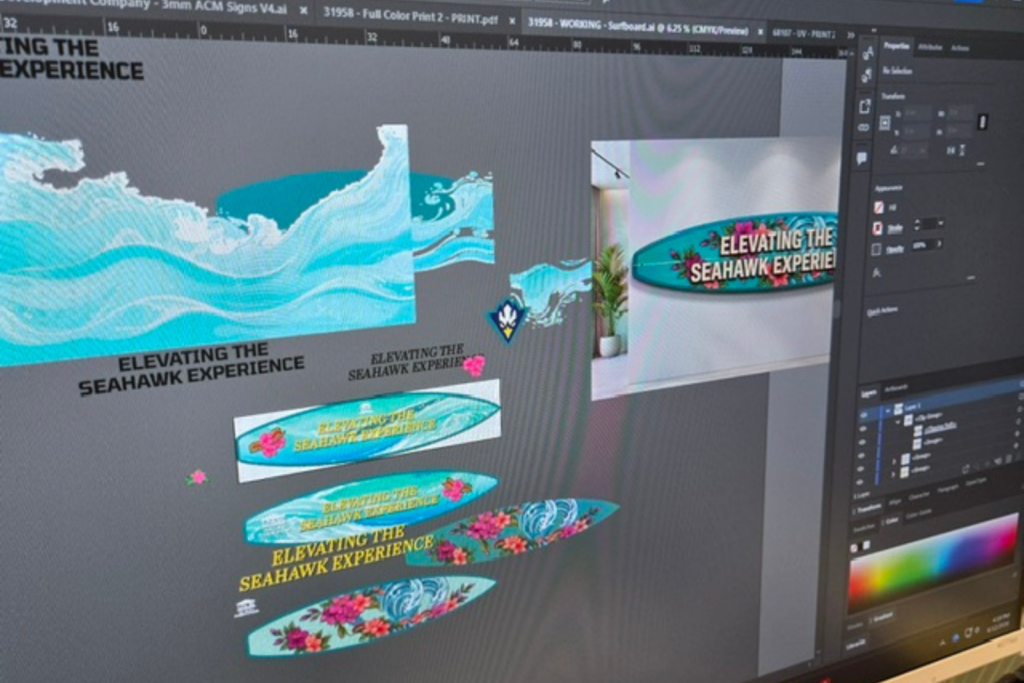
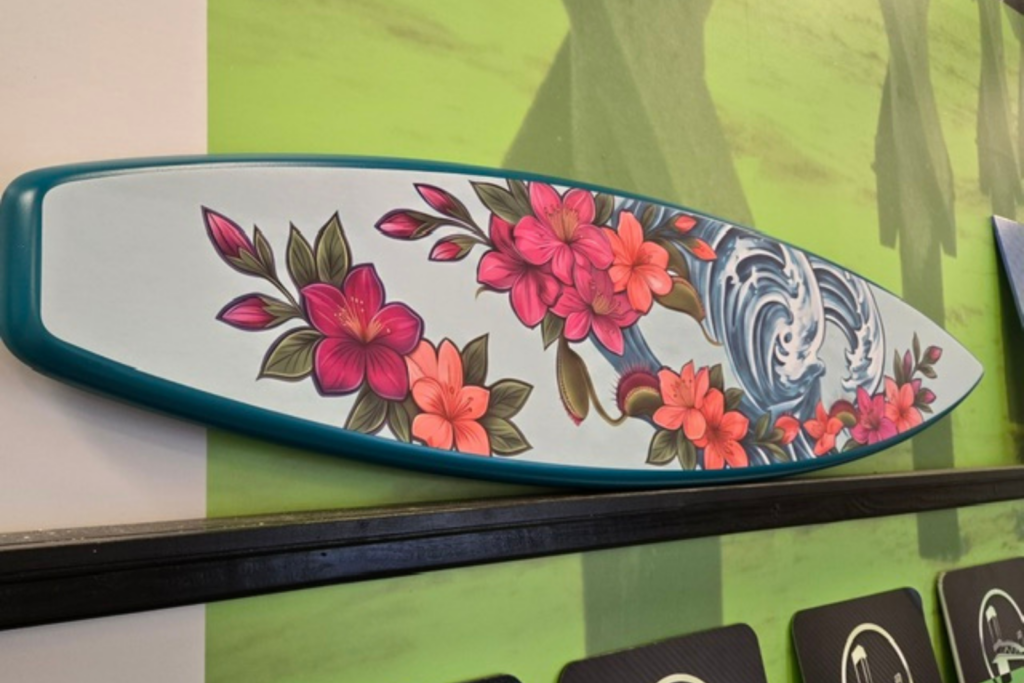
UNCW wanted the artwork to incorporate elements that felt distinctly local, including the beach, ocean, azaleas, Venus flytraps, and plenty of coastal color. Creating that artwork also gave Casey an opportunity to experiment with AI in a way he hadn't before.
AI-generated imagery provided a starting point, but getting from that initial image to something we could actually print at five feet long required quite a bit more work. Casey used professional design tools and his expertise to improve the image quality, adjust colors, remove elements, and ultimately create artwork that would work on the finished surfboard.
“The art was the most fun for me,” Casey said. “It was the first time I really got to dive into using AI this way, and I enjoyed the challenge of figuring out how to get the design where it needed to be.”
Trying Something New in Production, Too
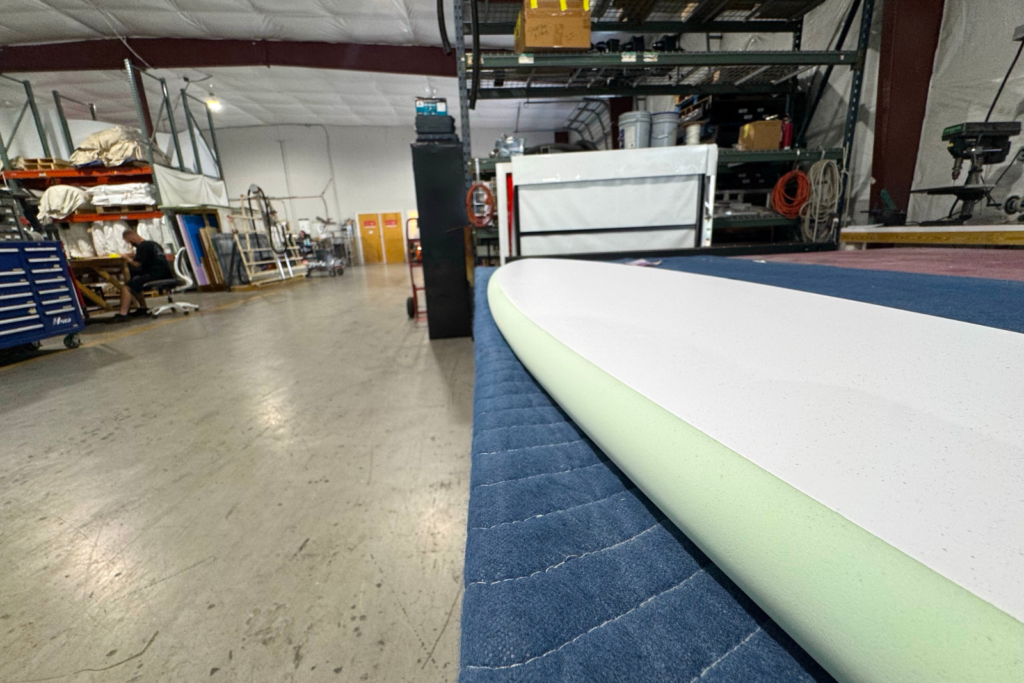
The design wasn't the only first for us on this project. Once we decided to create the surfboard ourselves, our production team had to figure out how to turn a flat piece of HDU into something that looked like the real thing.
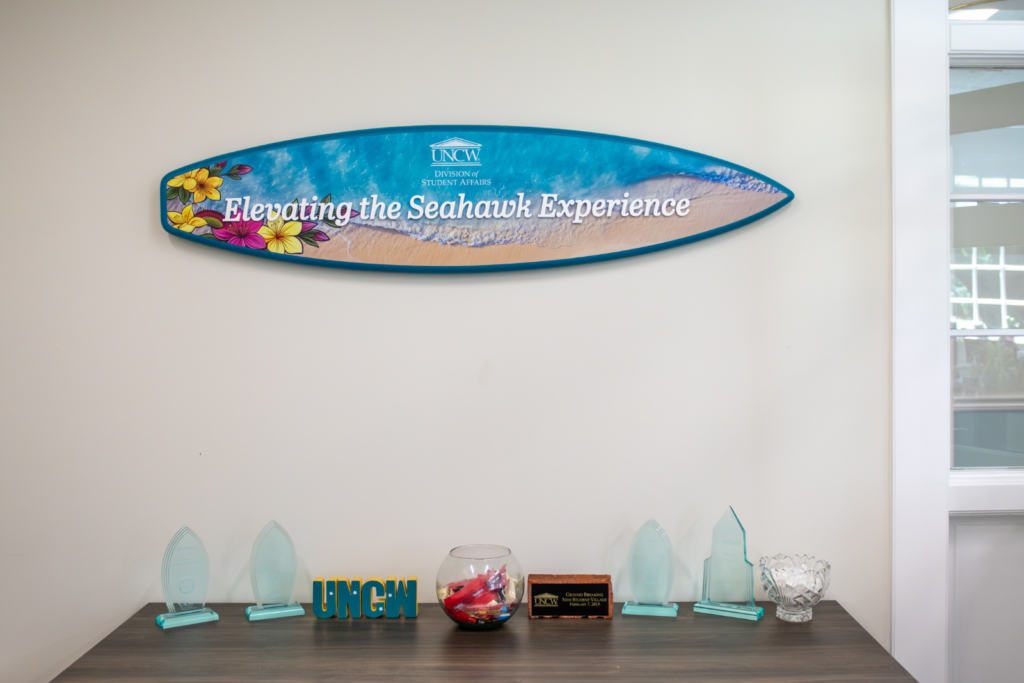
We cut the HDU into the five-foot surfboard shape, keeping the front and back flat, and then hand-sanded and contoured the edges to create the rounded profile of a surfboard. After it was shaped, we painted it UNCW teal and got it ready for another first: printing the artwork directly onto the painted HDU rather than printing it on vinyl and applying the vinyl afterward.
Using our swissQprint flatbed printer, we laid down white ink first and then printed the full-color artwork directly onto the surface. Because the printheads have to maintain a precise distance from the material, keeping the HDU flat throughout the process was critical. Even a slight amount of warping could create problems during printing.
Then came another challenge: How do you line up a surfboard-shaped piece perfectly on a flatbed printer when there isn't a nice square corner to use as a reference point?
Our team used the original HDU material surrounding the cut surfboard to create a template. That gave us the 90-degree reference point we needed to position the piece correctly on the print table and make sure Casey's artwork landed exactly where it was supposed to.
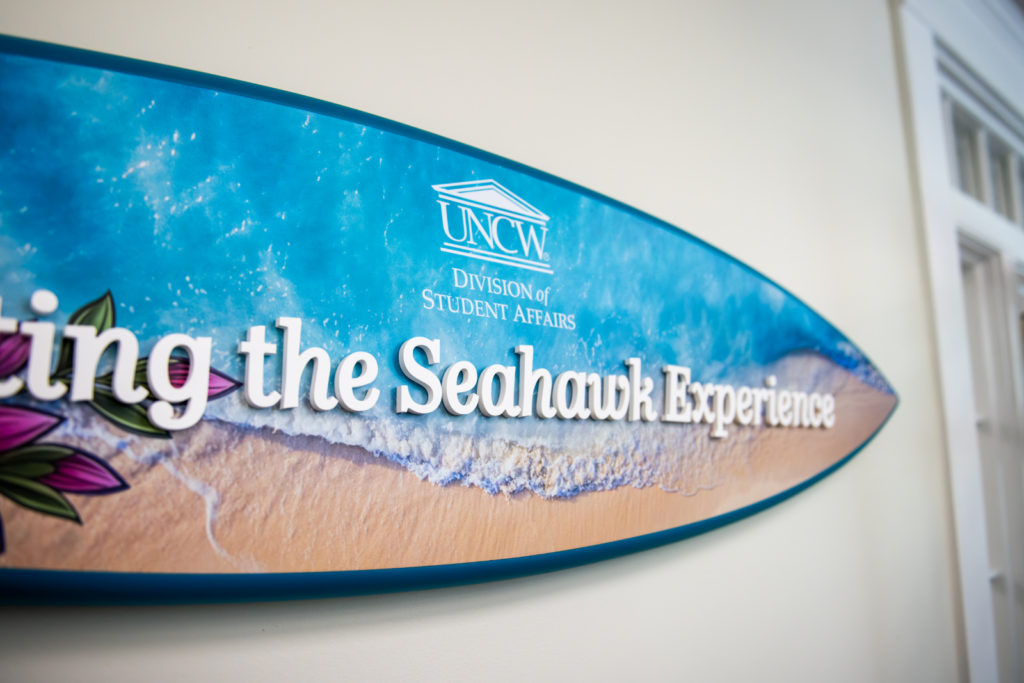
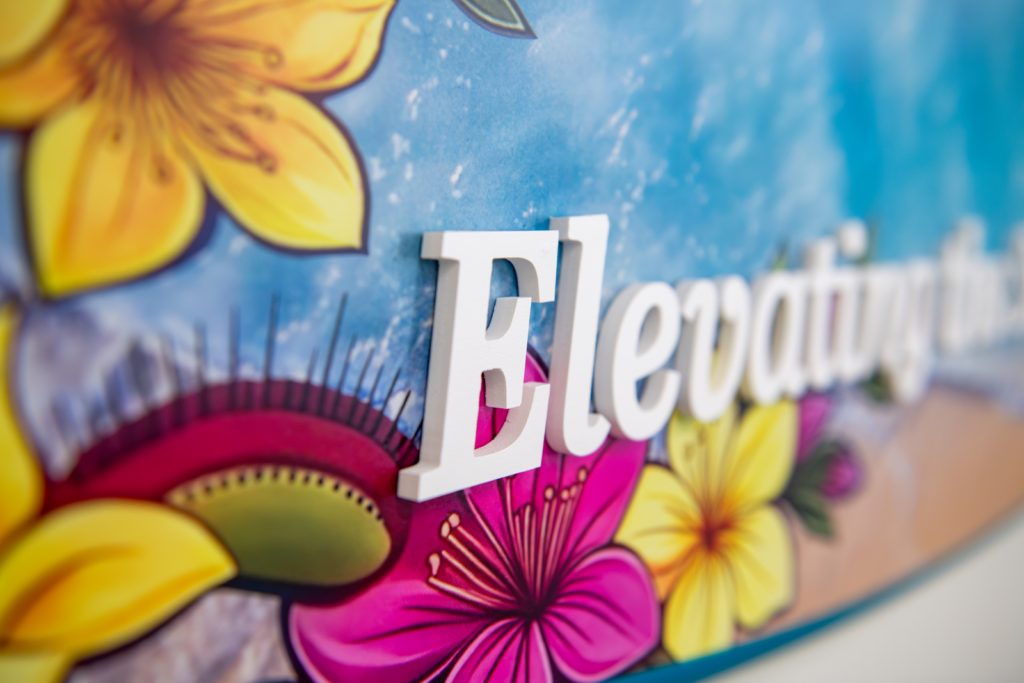
Once the printing was complete, the surfboard received a high-gloss clear coat, and half-inch dimensional PVC letters were added to create the “ELEVATING THE SEAHAWK EXPERIENCE” message.
Test First, Surf Later
Because we were trying a new production process, we didn't want the finished five-foot surfboard to be the first time we tested it.
We created smaller surfboard mockups and took them through essentially the same fabrication, sanding, painting and printing process. We also experimented with different thicknesses of HDU to determine what would give us the look we wanted while still allowing the edges to be shaped by hand.
That dry run allowed us to work through the process and make sure our approach would produce the finished result we wanted before moving ahead with the real thing.
A Fun Project and a New Tool in Our Toolbox
For Project Manager Sarah Bryan, the unusual nature of the project was part of the appeal from the beginning.
“As soon as they mentioned surfboard, it piqued my interest,” Sarah said. “I loved the brighter colors and the whole aesthetic of it, but I also enjoyed the challenge of the process. We got to do something new, and it worked, so we’ve got another tool in our toolbox that we can now pull out.”

That's one of the things we enjoy most about custom signage. Every project starts with an idea, but some give us the chance to get especially creative with how we make it happen. Figuring that part out is half the fun.
So, if you’re ready to get started on an idea for a sign that’s a little outside the ordinary, contact us today for a free quote. We’d love the chance to figure it out with you.